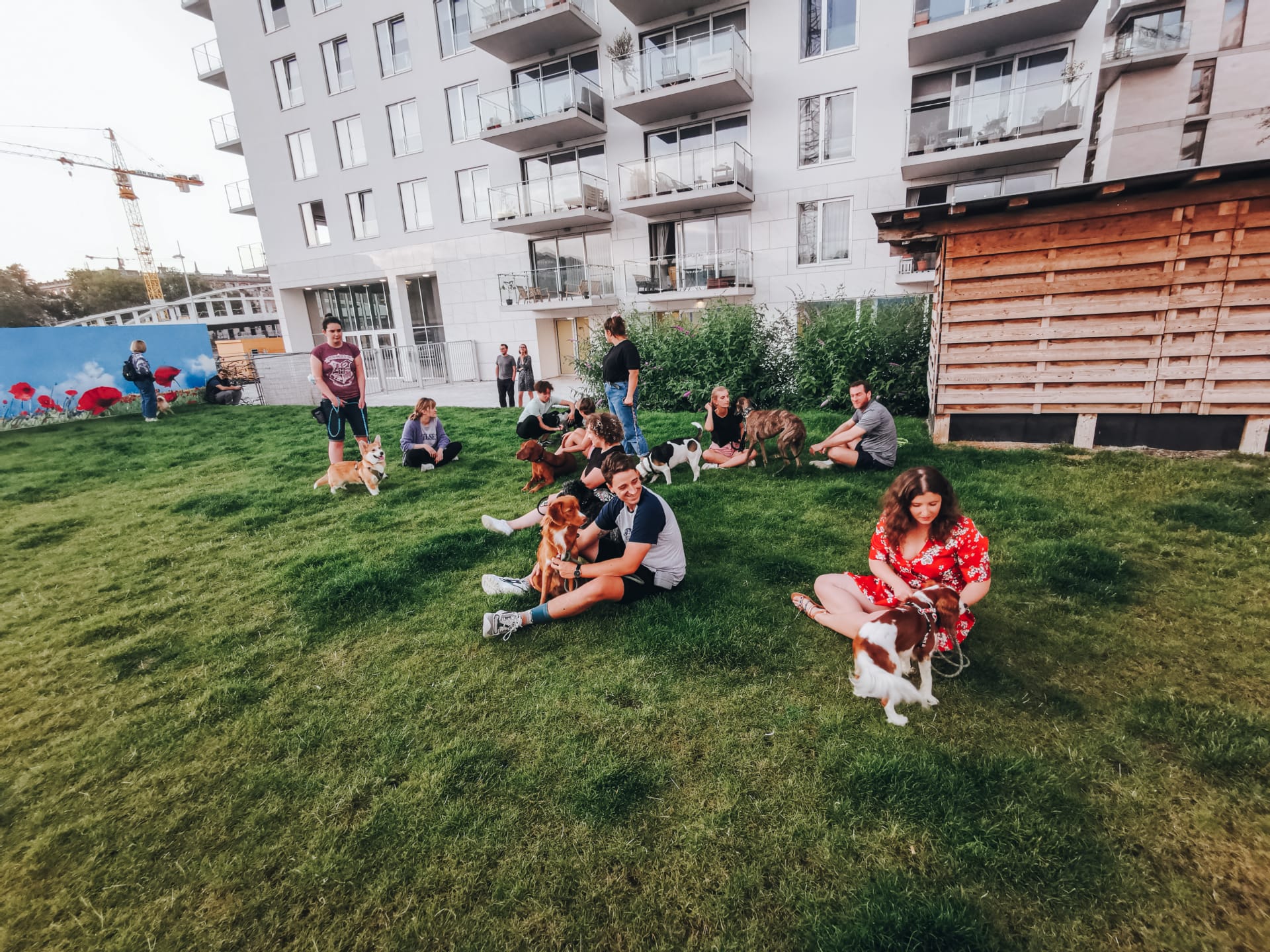
A group class of owners and their dogs posing together after a session
Em's Pups Behavior Solutions logo
Em's Pups Behavior Solutions · Online & In Person

Real dogs. Real world.
Real training.

Reactivity rehabilitation and breed-specific training — in person or online

If your dog barks, lunges or shuts down at other dogs, bikes or people, you've probably already tried three methods off the internet. Big Feelings Academy is four weeks of real work — done in person in your own streets, or fully online with me coaching you live on your own walks. Either way it's built around your dog's breed, history and actual threshold, not a group obedience curriculum.

Apply for a place

Trusted by expats from all over the world

★★★★★ 4.9 average · Google reviews

The part nobody posts about

You didn't get a difficult dog. You got a dog nobody explained to you.

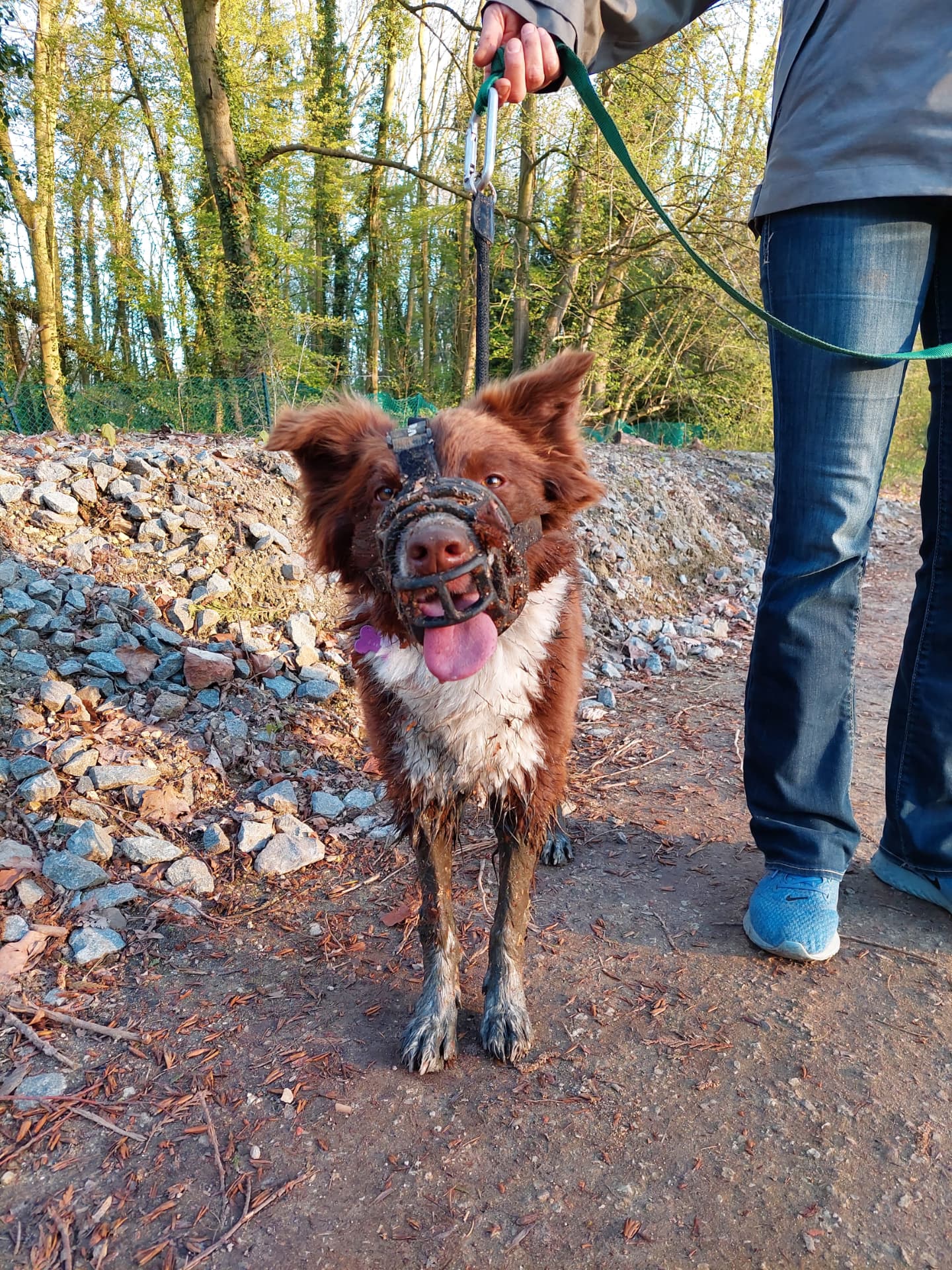
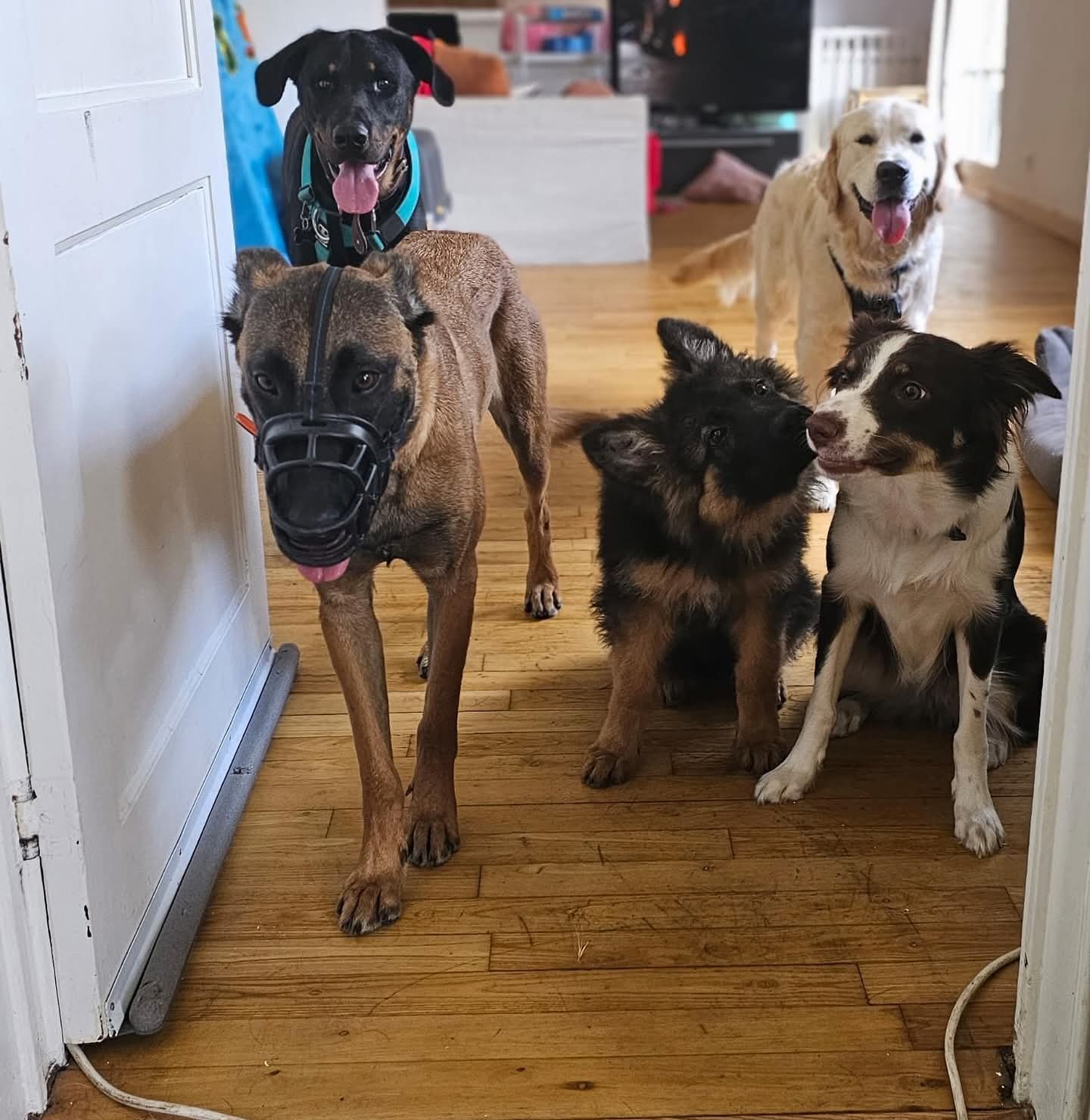
A muzzled brown collie mix on a lead on a woodland path

Almost every owner who contacts me does so after one specific moment. A reaction in public that felt out of control. A stranger using the word aggressive. Or the quieter one — sitting on the sofa realising you don't want to spend the next ten years arranging your life around this. That's the point where managing stops working and you need someone to look at the dog in front of you.

  • 01

    Walking at 5 AM so nobody sees you

    You've mapped your neighbourhood by which streets are empty at which hour. You cross the road before the other owner even notices you. It works, and it's also slowly shrinking your life.

  • 02

    The leash arm you can't relax

    Every walk is spent scanning for the next dog, bike or scooter. Your shoulder hurts. You've been pulled off balance more than once and you're quietly afraid of the day your dog reaches someone.

  • 03

    Fourteen tabs of contradictory advice

    Balanced trainers say one thing, purely positive accounts say the opposite. Slip lead, front-clip harness, Gentle Leader. You've tried pieces of all of it and the behaviour got noisier, not quieter.

  • 04

    You've stopped inviting people over

    No friends at the flat, no dog-friendly terrace, no weekend away. Leaving the dog alone means coming home to a scratched door frame.

  • 05

    Somebody called your dog aggressive

    In the park, out loud, in front of other people. You defended your dog and then went home and wondered if they were right.

  • 06

    The guilt you don't say out loud

    You love this dog. You also sometimes resent the walk, and then feel awful about it. Most owners I meet think they're the only one who has that thought.

The programme

Big Feelings Academy

Four weeks, online or in person. It's called Big Feelings Academy because that's what reactivity is — a dog with feelings bigger than the situation and no idea what to do with them. We're not teaching your dog to ignore the world. We're teaching them a different response to it, and teaching you what to do with your hands, your feet and your leash while that happens.

Each group has limited places and every plan starts with breed and history, because a herding breed chasing scooters and a fearful rescue barking at men in hats are not the same problem. You get weekly sessions, written notes after each one, and messaging support in between for the days it goes sideways.

Week 1

Understand your dog

We stop guessing. You learn to read the small stuff — the lip lick, the head turn, the stiffening two seconds before the bark — and we build a written profile of your dog's history, triggers and threshold distance.

  • Reading stress signals before the reaction
  • Mapping your dog's specific triggers
  • Breed and genetics: what you're actually working with

Week 2

Change the pattern

Handling and management first, because you need walks that don't fall apart while the training work happens. Equipment, routes, timing, and what you physically do with your hands and feet when a dog appears around a corner.

  • Leash mechanics that don't rely on strength
  • Route planning and exit strategies
  • Your emergency protocol, rehearsed until it's automatic

Week 3

Work at distance

Structured exposure at a distance your dog can actually think at, then closing that distance in steps we decide together. This is the slow, unglamorous part where the real change happens.

  • Threshold work with a neutral helper dog
  • Building a genuine recall under mild pressure
  • Decompression and rest days — non-negotiable

Week 4

Take it into real life

We train where you actually live: your street, your tram stop, your local shop, your park at 6 PM on a Wednesday. You leave with a written maintenance plan and a plan for setbacks, because setbacks come.

  • Sessions in your own neighbourhood
  • Café and terrace practice
  • Written plan for the next three months
Where this ends up

A Saturday you don't have to plan

You leave the flat at 10 AM instead of 6. A dog comes round the corner and you turn, feed, carry on — no adrenaline, no dragging. You sit outside at a café and order a coffee while the dog settles under the chair.

And on the bad days, because there will be bad days, you know what to do in the first three seconds instead of the tenth minute. That's the actual outcome I'm aiming for.

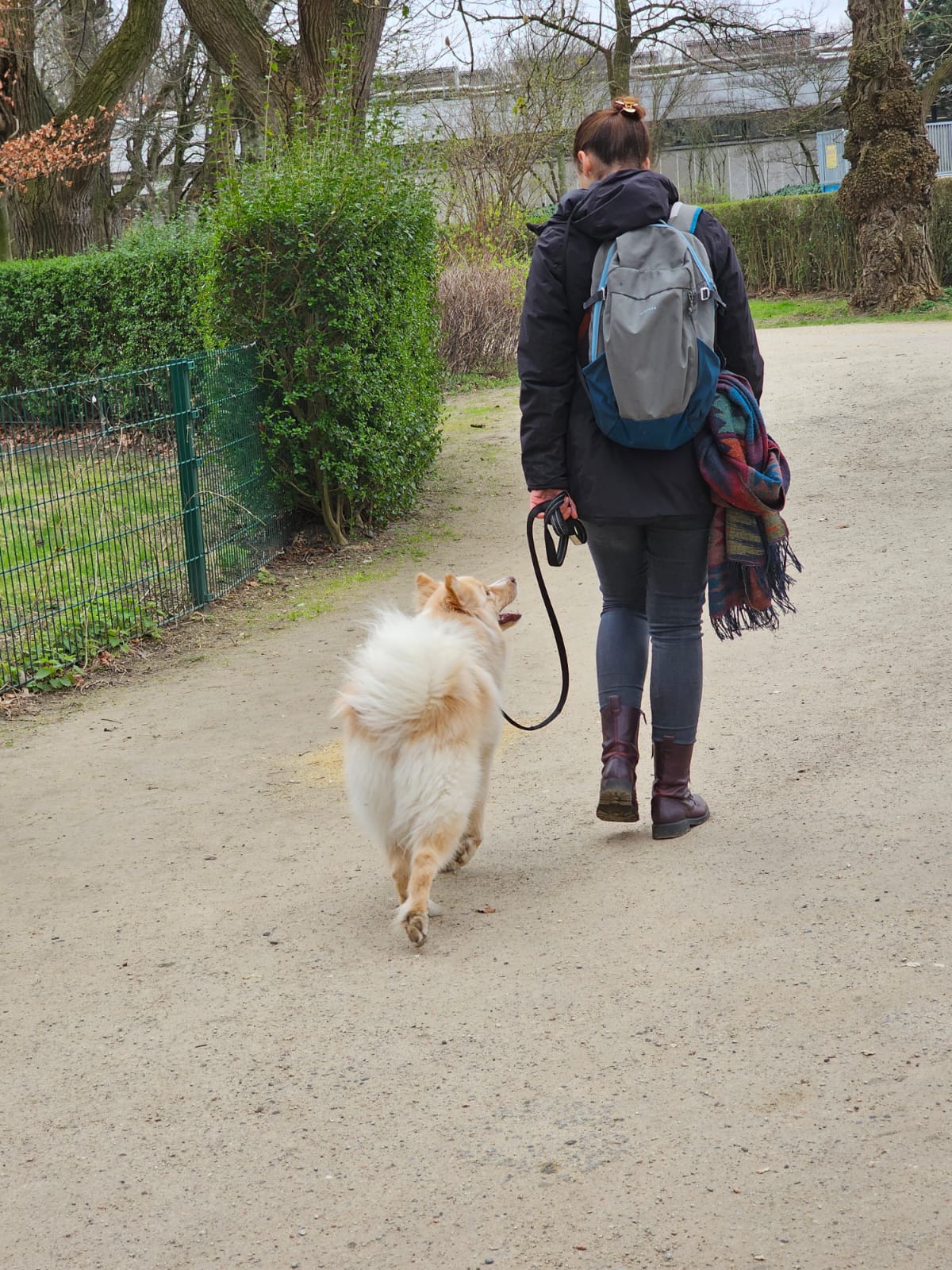
Owner walking a fluffy dog calmly on a loose lead along a park path

Real owners

What changed, in their words

Two weeks in, Nala walked past a dog on the pavement without a sound. I actually cried in the street. Em never once made me feel like I'd ruined my dog.

Camille

Malinois cross, 3 yrs, in-person programme

Passing dogs at 3 metres by week 3

We'd done two obedience courses. Nobody had ever asked about his breed. Once Em explained what a herding dog does with movement, half of what he was doing made sense.

Thomas & Ruben

Border Collie, 2 yrs, online programme

Stopped chasing bikes and scooters

Honestly, week 3 was hard and I wanted to quit. Em told me straight that we'd gone too fast and we went back a step. That honesty is why it worked.

Sofie

Rescue from Romania, 5 yrs, in-person programme

First relaxed evening walk in 18 months

I no longer plan my day around avoiding other dogs. We had coffee on a terrace last Saturday and she slept under the table the whole time.

Nadia

Staffordshire cross, 4 yrs, online programme

Café visits without reacting

My husband and I were handling him completely differently and that was half the problem. Em trained both of us, not just the dog.

Elise & Bram

German Shepherd, 18 mo, in-person programme

Consistent handling from both owners

He still has bad days. The difference is I know what to do on a bad day instead of dragging him home in a panic.

Jonas

Beagle cross, 6 yrs, Anderlecht

Recovery in under a minute after a reaction

How this differs

Most courses train obedience. Reactivity isn't a disobedience problem.

The usual group-class route

  • Group classes with six other dogs in one hall
  • The same obedience curriculum for a Malinois and a Cavalier
  • Corrections applied when the dog is already over threshold
  • A six-week block, then you're on your own

Big Feelings Academy

  • +One dog, one student, one plan at a time
  • +Breed and genetics assessed before we choose a single exercise
  • +Work done at a distance where your dog can still think
  • +Written maintenance plan and follow-up after the programme ends

Before you apply

I'd rather turn you down than take your money

This is for you if

  • Your dog barks, lunges or freezes at dogs, people, bikes or scooters
  • You can commit to weekly sessions — online or in person
  • You can put in 10–15 minutes of practice most days
  • You want to understand the behaviour, not just suppress it
  • You're ready to change some of your own habits, not only the dog's

This isn't for you if

  • You want the dog fixed while you're at work and not involved
  • You're looking for a guarantee that the reactivity disappears forever
  • You want one tool or gadget to do the work for you
  • You need the problem gone this weekend
  • You're hoping one session will undo three years of practice

What you won't be asked to do

Four weeks without any of this

Without tools you are not comfortable using

Without flooding your dog at the dog park to 'socialise' them

Without hunting the city for ever-higher-value treats

Without a PhD in learning theory to follow the plan

Without another six-week group class in a rented sports hall

Without pretending the breed in front of you doesn't matter

My focus is on building connection and understanding between you and your dog — not on finding the magic tool, because it doesn't exist. No piece of equipment teaches a dog what to do when the world gets loud, and no gadget teaches you what to do with your hands, your feet and your leash in the first three seconds. We work with the equipment you're comfortable using, and we spend our time on the relationship and the plan instead.

Same dog, different Tuesday

What the week looks like, before and after

Right now

  • Walks at 5 AM and 11 PM to avoid everyone
  • Crossing the street mid-conversation, every time
  • Declining the terrace, the trip, the friends coming over
  • Explaining your dog to strangers who already decided

After the four weeks

  • Walking your normal route at a normal hour
  • Seeing a dog approach and knowing exactly what you'll do
  • Coffee on a terrace with the dog asleep under the chair
  • Talking about your dog's progress instead of apologising

Cold hard facts

The numbers, plainly

No packages of forty sessions. No claims I can't back up.

4

Weeks, online or in person

One structured programme. Weekly sessions online or in person, in the places you actually walk.

1

Plan per student

No group classes for reactivity work. The plan is written for your dog, not adapted from a curriculum.

0

Magic tools required

The work is connection and understanding, not a gadget. We use the equipment you're comfortable handling.

48h

Reply to applications

You hear back within two working days, including a straight no if I'm not the right fit.

Ready to stop walking at dawn?

The application takes about ten minutes and tells me what I need to know: breed, age, what happens on walks, what you've already tried. If it's a fit, we book a free call. If it isn't, I'll tell you and point you somewhere better.

Start the application

No payment now. No obligation after the call.

Who you'd be working with

I got this wrong first

Hi, I'm Em — and I specialize in dogs with a lot of personality.

If your dog is a bit extra, prone to big meltdowns, or secretly a high-octane drama queen, you're in the right place. I help owners navigate the stress of living with spicy, sensitive, and overstimulated dogs through judgment-free, real-world reactivity rehabilitation.

I know how exhausting it is to feel isolated, embarrassed, or entirely out of control when your dog's feelings get too big for them to handle. That's why my programs aren't about rigid perfection or cookie-cutter commands. They're designed to lower the volume on the chaos, build real confidence at both ends of the leash, and turn your spicy companion into a calm, reliable partner.

You don't have a "bad" dog — you just have a sensitive one who needs a better roadmap.
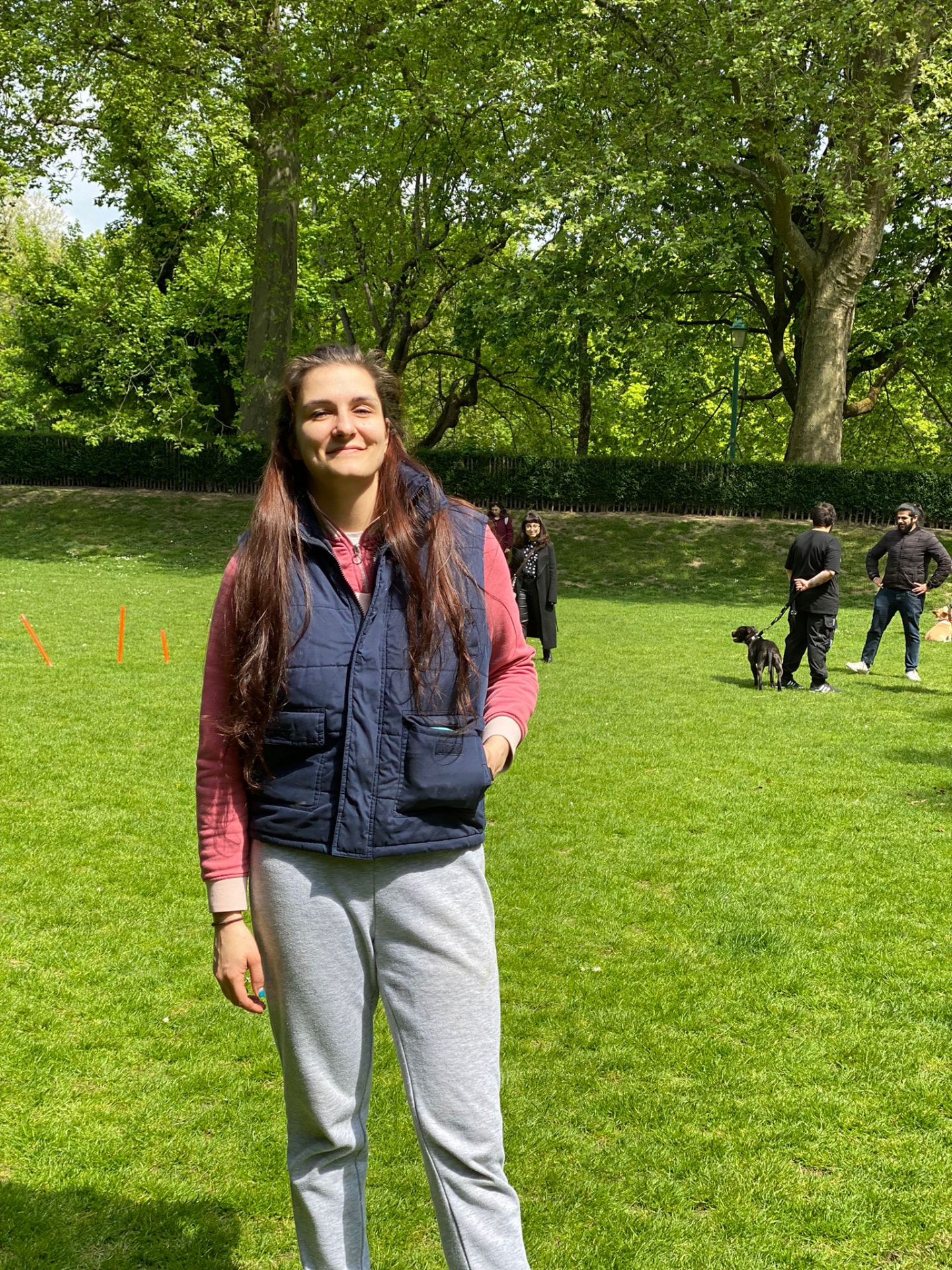
Em, dog behaviour trainer, standing in a park during a training class

Em — Em's Pups Behavior Solutions

Reactivity rehabilitation & breed-specific training, online and in person

Where the training comes from

Still a student, on purpose

I spend part of every year in seminars and workshops rather than repeating what worked in 2021. Behaviour work moves, and the dogs in front of me change.

  • I have trained with and learned from industry giants like STSK9 and YCN
  • I have trained in different disciplines, from dog training to nutrition, mental wellbeing and dog sports
  • I have extensive experience in breed-specific disciplines

More reviews

Straight from the owners

Questions I get asked

Including the awkward ones

Ten to fifteen minutes of deliberate practice on most days, plus the way you already walk your dog. It's less about long sessions and more about not undoing the work on the walks in between. Owners who skip the daily practice see slower results — I'd rather say that upfront.

I take a handful of students at a time

That's not a scarcity tactic, it's the maths of doing this work properly — whether we meet in person or online. When the current group is full, applications go on a waiting list and I'll tell you roughly how long. Here's how it goes from here.

01

Fill in the application

Ten minutes. Breed, age, history, what happens on walks, what you've already tried. The detail matters — it's how I decide whether I can help.

02

We talk on the phone

Twenty to thirty minutes, free. I'll ask about the last incident and tell you honestly whether Big Feelings Academy fits or would I recommend a different approach or service.

03

We start in your street

If it's a fit, we book the first session — at your home or online — and get going. Each group has limited places.

Apply for a place

You'll hear back within two working days — including a no, if that's the honest answer.

Owners sitting on the grass with their dogs during an outdoor group class